




EXAMPLES
DATA GOVERNANCE OPERATING MODEL
Data governance offers a range of benefits to sports organizations by providing structure, accountability, and control over their data assets.
It enables organizations to realize the full value of their data while minimizing risks and ensuring compliance with regulatory requirements.

AUTOMATION
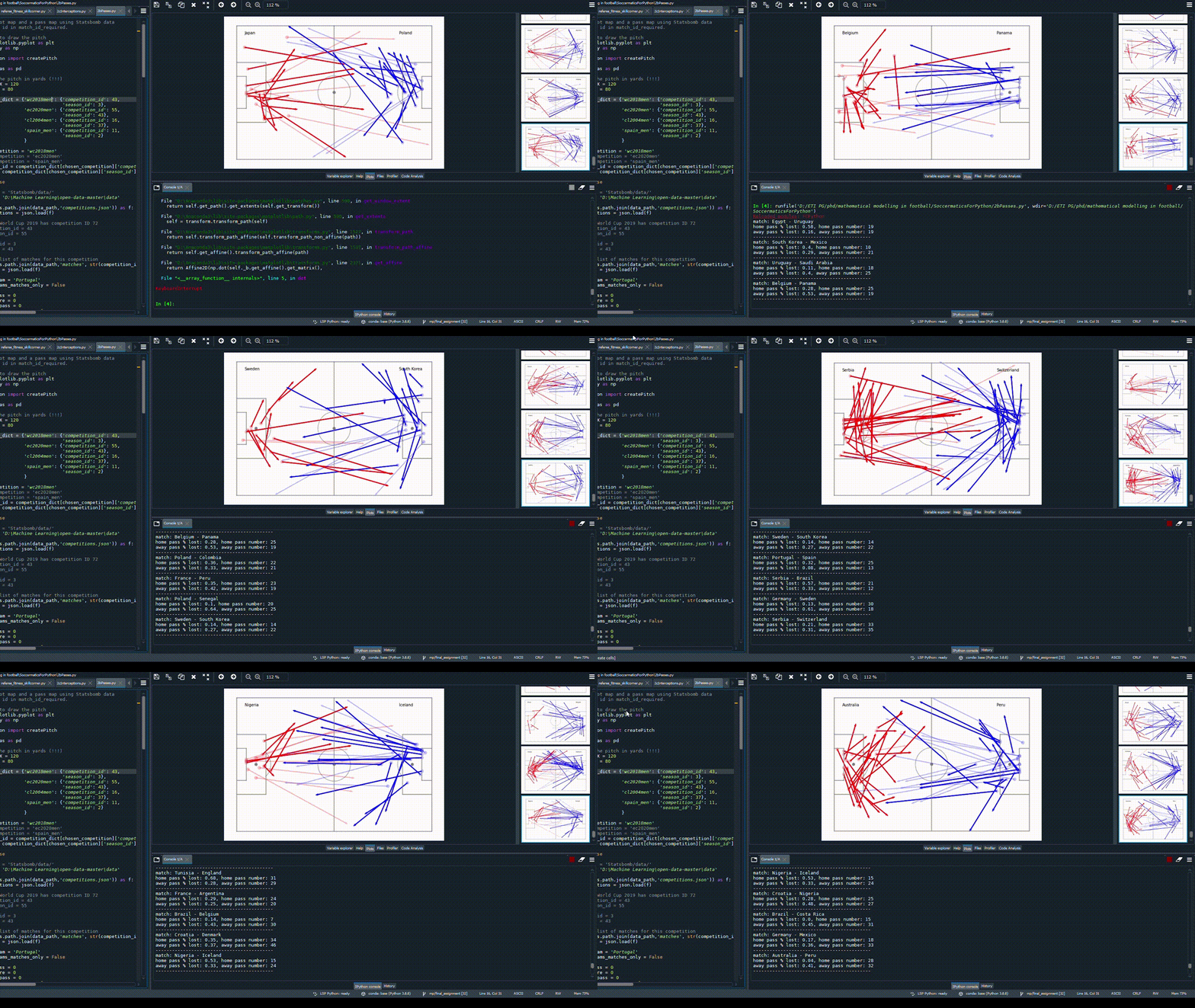
Automating the analysis workloads and pipelines provides enormous benefits of scale. Once the scenario is programmed, it can later be reused multiple times at a click of a button while football analysts can focus on what they can do best - analysing information and providing insights, rather than building everything from scratch each time. Vast amounts of data can be analysed instantaneously and frequently without the need for manual intervention.
ANALYTICAL DATABASE ARCHITECTURE
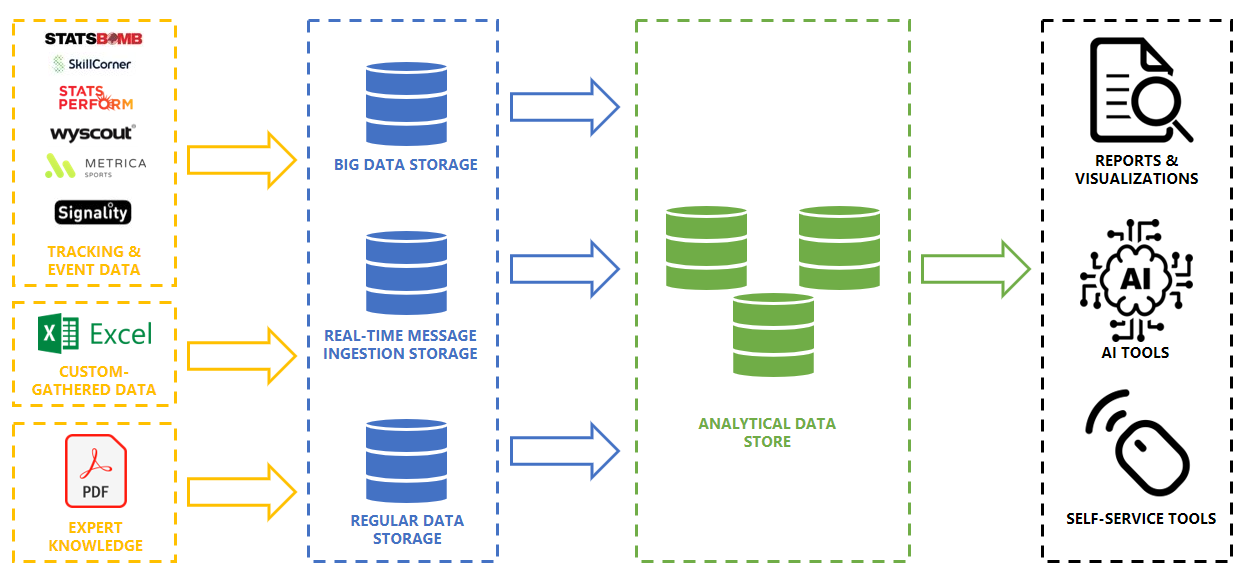
Raw and intermediary data, as well as final reports and visualizations might be a useful source of knowledge for the future. They can also feed further analyses and machine learning models. It is crucial to have a well architected and thoroughly thought over database to store all analytical data for quick, easy and reliable retrieval when the need arises.
Event data analysis
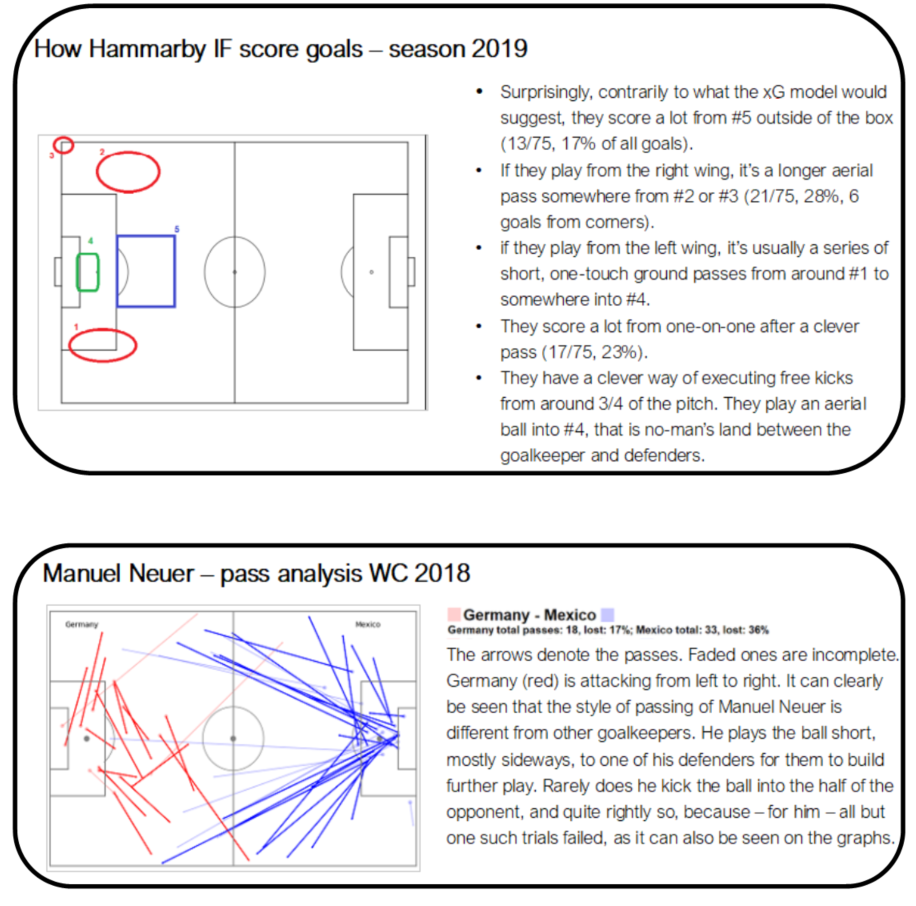
Event data are pieces of information collected during the match that cover e.g. passes, goals, duels, fouls, etc. They usually contain coordinates of involved players and the ball. For some (e.g. passes), they may contain the starting position and the ending position of the ball as well as the outcome of the event.
Tracking data analysis
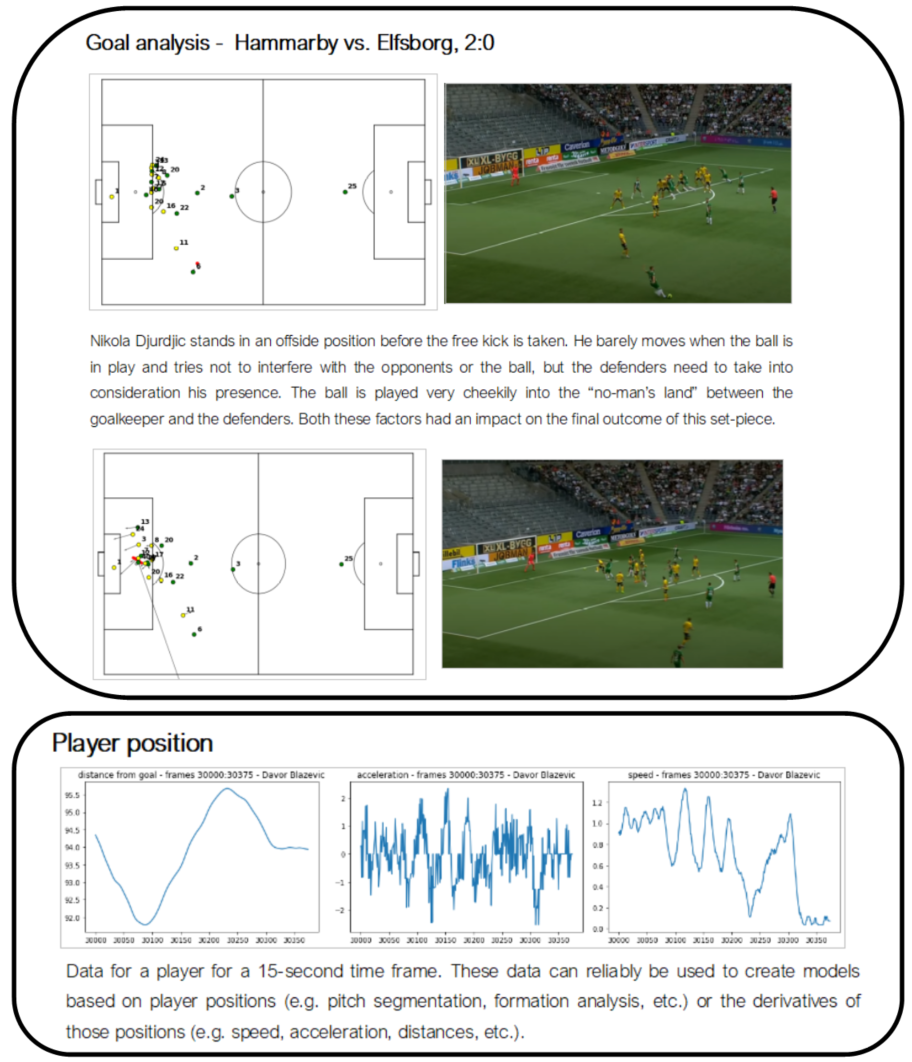
Tracking data are pieces of information collected during the match that cover positions of all the players and a ball in a given moment in time. They are usually collected 10 to 24 times per second for the whole duration of the game.
Fitness analysis
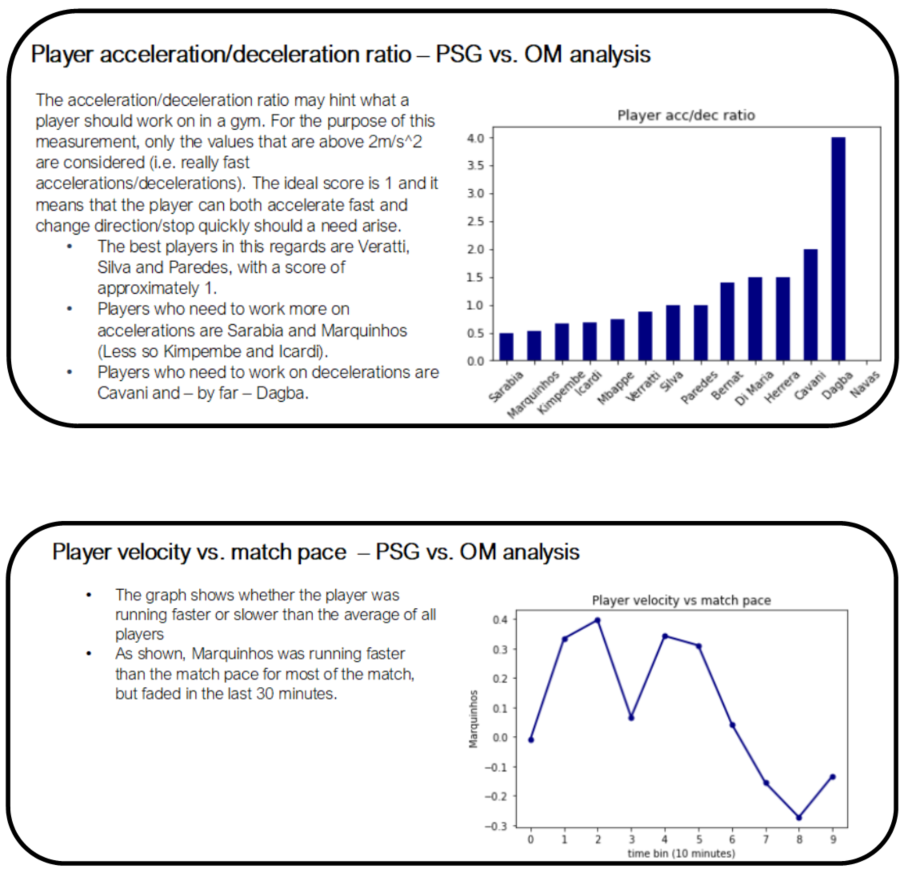
Fitness analysis is possible even without video tracking data. The GPS trackers offer a variety of statistics that can be used to assess players' health, form, physical strengths and weaknesses, positioning and many more.
Player comparison
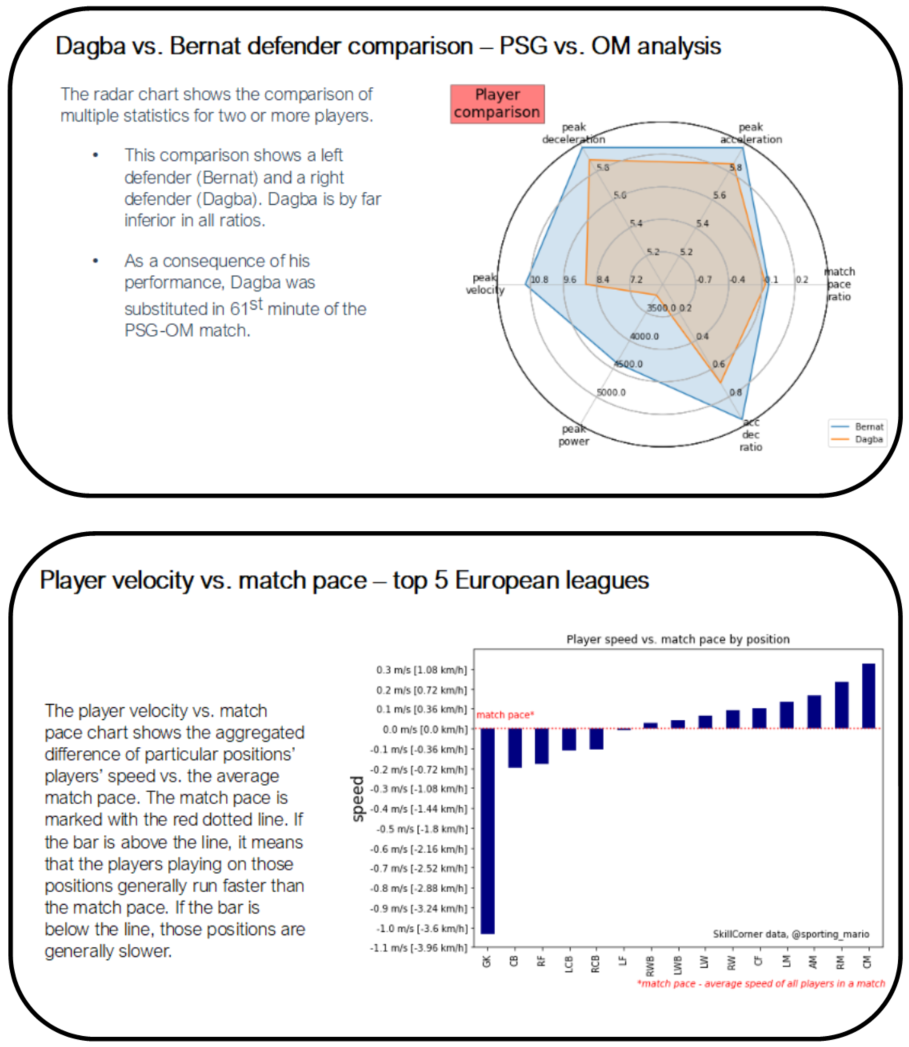
Available data allow comparing players between themselves from a variety of angles, be it a radar chart of fitness data, a speed bar chart or any other concept that is backed by the dataset.

Ad-hoc analysis
An analysis based on current needs and available data with the use cutting edge technologies and modern data manipulation programming languages. Creating visual, tabular and textual aids for decision making.